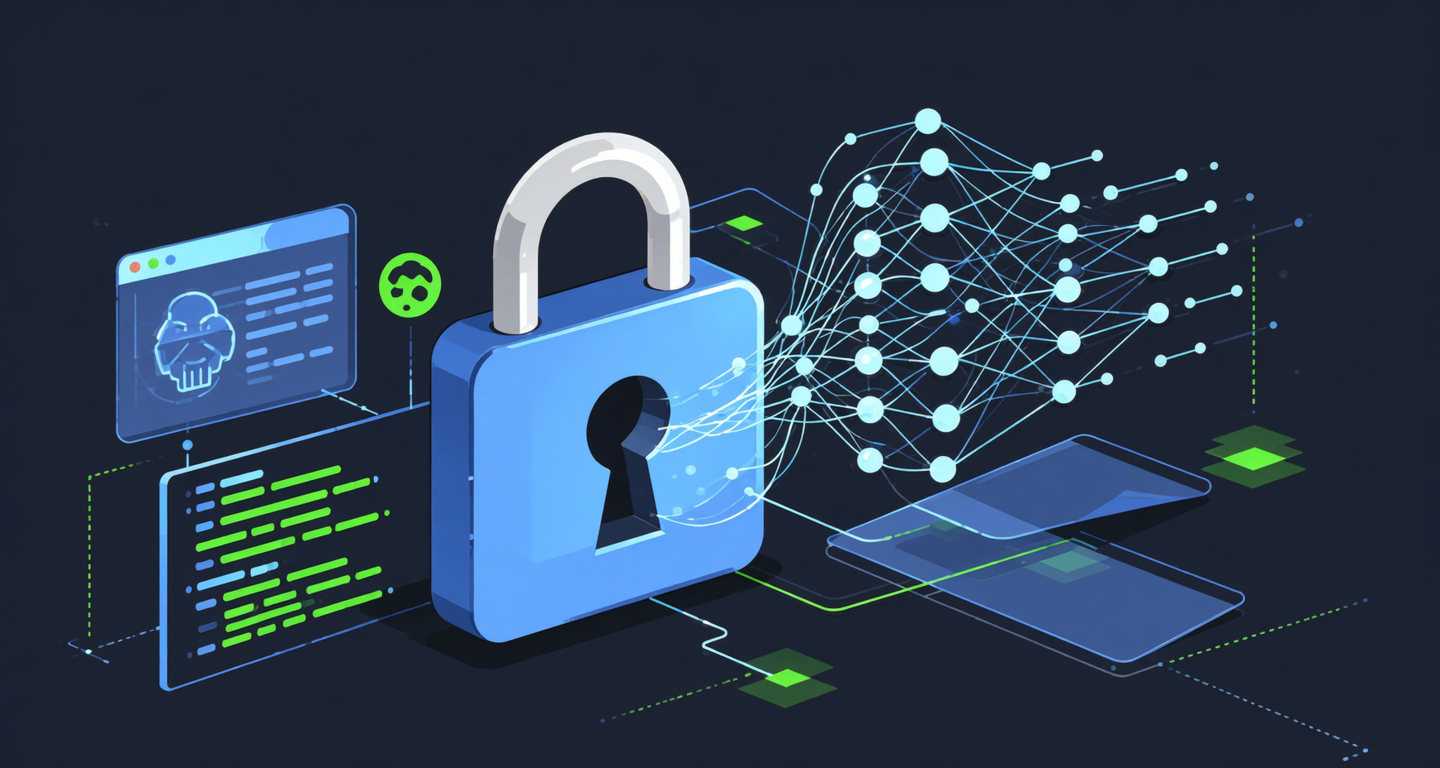
As enterprise Artificial Intelligence transitions from the prototyping phase to large-scale production, Chief Technology Officers are facing a critical architectural crossroad. The initial wave of enterprise AI was built heavily on proprietary, closed-source APIs. While these managed services offer a frictionless starting point for developers, scaling them for high-volume enterprise workloads introduces severe financial unpredictability, data privacy risks, and strategic vendor lock-in.
The release of frontier-class open-source models, most notably Meta's Llama 3 series, has fundamentally altered this landscape. Organizations now have the capability to deploy models that rival closed-source counterparts directly onto their own private, bare-metal infrastructure. Understanding the strategic differences between these two paradigms is essential for long-term AI success.
The Economics of Scale: Per-Token Billing vs. Fixed Infrastructure
The most immediate friction point with proprietary APIs is the pricing model. Managed AI services typically charge on a per-token basis (billing for every word sent to and generated by the model). During the R&D phase, this variable cost is negligible. However, as an application scales to millions of daily user interactions or processes massive internal document repositories via Retrieval-Augmented Generation (RAG), this operational expense (OpEx) explodes linearly. A successful product launch essentially becomes a financial penalty.
Hosting an open-source model like Llama 3 (70B or 400B) on private, dedicated GPU infrastructure completely flips this economic model. Leasing or purchasing bare-metal servers represents a fixed infrastructure cost. Once the hardware is provisioned, the cost of generating one token versus one billion tokens remains effectively the same. For high-throughput, continuous workloads, self-hosting drastically drives down the Cost Per Token, delivering a significantly higher Return on Investment (ROI) at scale.
Data Sovereignty and Security Compliance
For industries dealing with highly sensitive information—such as finance, healthcare, and government—sending proprietary data across the internet to a third-party API endpoint represents a massive security and compliance vulnerability. Even with enterprise agreements, the data leaves the corporate perimeter, raising complex legal questions regarding data sovereignty, GDPR, and regional privacy regulations.
Deploying open-source models on private infrastructure provides absolute data isolation. Whether deployed on on-premises servers or single-tenant bare-metal clusters in a localized data center, the data never traverses a third-party network. The enterprise retains 100% control over data governance, making private infrastructure the only viable route for organizations handling classified or strictly regulated information.
Escaping the "Black Box" and Algorithmic Drift
Proprietary APIs are black boxes. Engineering teams have no visibility into the underlying model weights, training data, or architecture. Furthermore, vendors routinely update their models behind the scenes. This phenomenon, known as "model drift," means a prompt that worked perfectly on Tuesday might yield drastically different, degraded results on Thursday, breaking production pipelines without warning.
Open-source models eliminate this unpredictability. By downloading the Llama 3 weights to private infrastructure, an engineering team permanently locks in the model's behavior. They gain complete control over the deployment environment and can apply advanced fine-tuning techniques—such as Low-Rank Adaptation (LoRA)—to customize the model deeply for specific corporate tasks. The enterprise owns the intellectual property of the fine-tuned weights, entirely independent of any external vendor's product roadmap or sudden pricing changes.
The Strategic Imperative
Relying on proprietary APIs is an excellent strategy for rapid prototyping and validating product-market fit. However, building a company's core infrastructure on rented algorithms poses an existential risk. By leveraging powerful open-source models like Llama 3 on dedicated, private hardware, enterprises transition from renting AI as a service to owning AI as a core, secure, and financially predictable corporate asset.
Own Your AI Stack
BRIGHTCHIP provides the bare-metal GPU infrastructure you need to deploy open-source LLMs with full data sovereignty. Stop renting algorithms—start owning your AI future on dedicated, single-tenant hardware.